What is Chatbase?
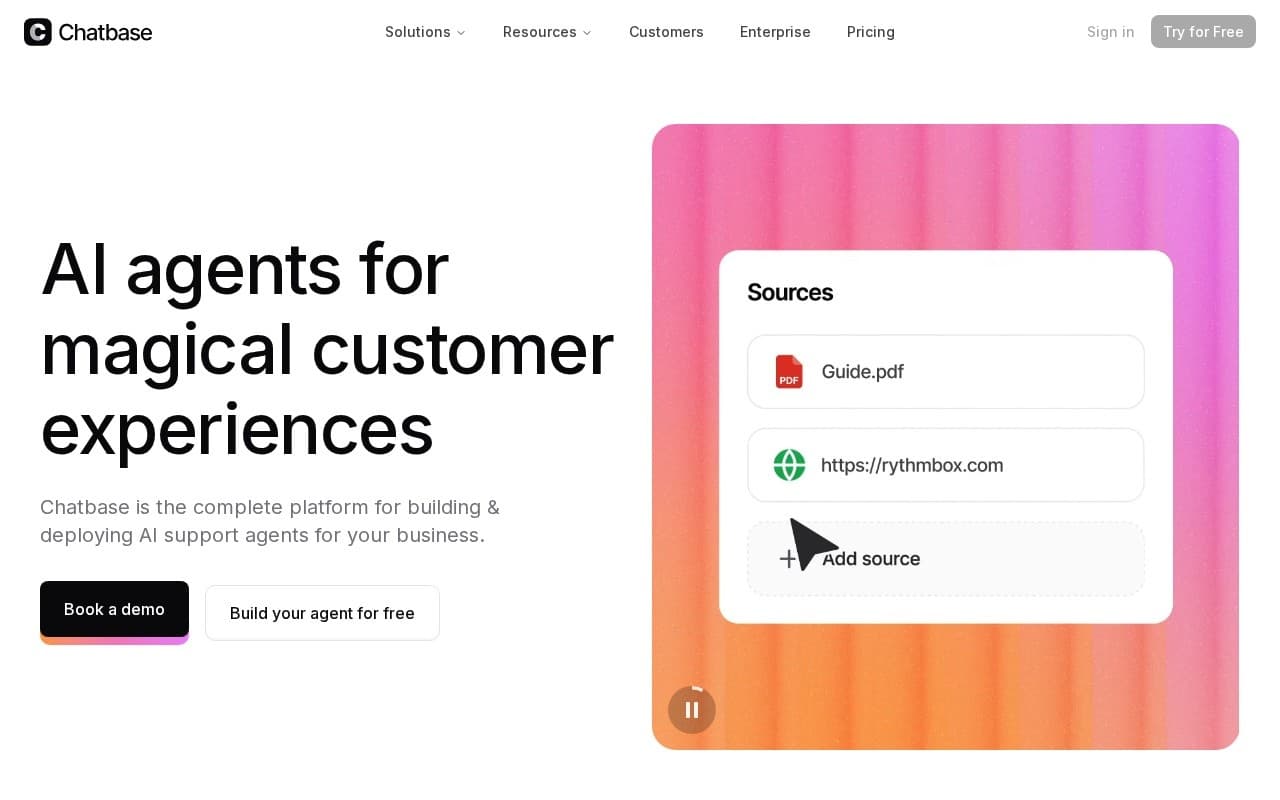
Chatbase lets you build an AI chatbot trained on your own content and drop it onto your site as a widget. Point it at your website, help docs, and PDFs, and it answers visitor questions in your brand's voice, captures leads, and hands off to a human when it needs to.
It sits on the line between support and marketing. On the support side it clears the repetitive "where's my order" and "do you integrate with X" questions. The job marketers care more about is at the front of the funnel: catching the visitor poking around the pricing page, answering the objection that would have lost them, and grabbing an email before they go.
Setup is deliberately fast:
- Point Chatbase at a URL, a sitemap, or upload files, and it crawls and builds a knowledge base
- Tune the system prompt to set tone, scope, and the bot's persona
- Embed the widget with a snippet, or use the API for a custom surface
- Watch the conversation logs to see what visitors actually ask, then feed gaps back into the training
The lead-gen layer is what earns it a place in a marketing stack. The bot collects contact details mid-conversation, pushes them to a CRM, and tags each lead with the topic they asked about, so sales gets context instead of a bare email address.
Common workflows by role:
- Demand gen teams qualify and capture website visitors who would otherwise bounce
- Content teams turn a sprawling help center into a single ask-anything interface
- Product marketers see, in the logs, the exact questions and objections buyers raise
- Support teams deflect tier-one questions and escalate the rest with the transcript attached
It can also act, not just answer. Connected to your other tools, the bot can check an order status, book a meeting, or kick off a workflow without handing the visitor to a person, which moves it from FAQ widget toward something that resolves why they came.
A few specifics worth knowing:
- Trains on website crawls, sitemaps, uploaded docs, and manual question-and-answer pairs
- Connects to CRMs and other tools so captured leads and actions flow downstream
- Conversation analytics surface the most common questions and where the bot struggles
- Supports many languages, so one bot can serve a global audience
A content-trained bot is only as good as the content behind it. Thin or contradictory docs produce a thin or contradictory bot, and prompt tuning only patches so much. The teams that get value out of Chatbase treat it as a living surface, reading the logs each week and filling the gaps those conversations expose.
Freemium model with a free tier for evaluation, scaling to paid tiers by message credits, number of chatbots, and team seats.
Best for marketing and support teams that want a site chatbot for lead capture and self-serve answers, trained on their own content and live in an afternoon. Not ideal for complex enterprise support that needs deep, audited integrations across many backend systems, where a heavier platform fits better.